LWDD – Post-Storm Clean-up

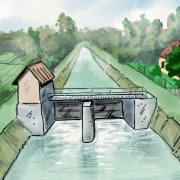
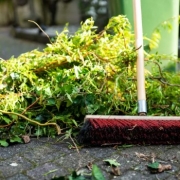
Following a severe storm event, the Lake Worth Drainage District (LWDD) conducts immediate post-storm assessments, inspecting water control structures, canal channels and the canal rights-of-way for vegetative and other debris with the potential to negatively impact drainage.

The public can assist by reporting storm damage via our Citizen’s Reporting System located on our website at https://lwddnet.wpengine.com/storm-response.  The user will be asked a few questions and a map will be provided to help identify the location of the incident in real-time. These public reports as well as LWDD staff assessments are reviewed and prioritized for vegetation removal. Priority is based on the following criteria:

  • High Priority – vegetation is in the water and threatening drainage
  • Medium Priority – vegetation is blocking the right-of-way and encumbering access or vegetation is significantly leaning over the waterway and could be a potential future threat to drainage
  • Low Priority – vegetation located on the LWDD right-of-way that may partially reduce access

Depending on the severity of the storm damage it may take several weeks before crews can address low priority incidents. Private property owners that wish to trim vegetation that has fallen or is leaning on their property from the LWDD right-of-way may do so at their discretion and expense. If access to the LWDD right-of-way is necessary to trim or remove vegetation, the property owner should receive prior approval from the LWDD for temporary access.

Any material from trimming or tree removal by the property owner must be properly disposed of by the resident or if applicable the contractor performing the work. Keep in mind that it is unlawful to place any debris in the canal or on the right-of-way in anticipation that LWDD will remove the material. Unlawful dumping will be reported to the authorities.

If fallen debris has damaged personal property, the individual property owner should contact their insurance company to submit a claim. The LWDD will not directly reimburse property owners for damage caused by acts of mother nature.

After a major storm event, debris clean-up is paramount to getting back to normal and the LWDD is committed to quick removal of hazardous flood prone debris for the safety of our residents.

Storm Readiness Includes Landscaping

Many residents work hard creating beautiful yards but living in Florida means we live with hurricanes. There is no way to completely protect your landscape from the effects of a severe storm, but there are some things you can do to minimize potential damage.

When a storm is approaching take time to mow your yard. This may seem unimportant at the time, but it will make debris clean-up easier, and you have one less thing to think about post-storm. Also, once the rain starts it may be days or even weeks before you can safely operate a lawn mower through the soggy soil and grass.

Do not prune trees and leave debris on site if a storm is imminent. It is better to take a chance and leave the tree intact if you cannot get the debris off site before the storm. Remove coconuts from coconut palm trees and harvest fruits from other trees that are mature enough to be picked. These items can become dangerous projectiles during high winds. If you have waited until the last minute, store debris in your garage or another safe place away from the wind.

Support small trees and tall plants with sturdy stakes driven at least 8-inches into the ground. You can also lay arches and trellises on the ground and anchor them with a rope. Masses of heavy vines growing on fences can pull fencing over in high winds. If the vines are extensive you may want to trim or remove them altogether.

In addition to wind damage, you may be faced with flooded areas of your yard for several days or weeks. Flooded conditions can seriously impact water-intolerant plants leading to fruit drop, wilting and root rot. Saturated soil coupled with high winds lead to uprooted trees, especially trees with shallow root systems. Do not add to the flooding. Turn your sprinkler system off. This includes irrigation systems with a rain shut-off device. You can reset your system to automatic when the soil dries out.

Clear house gutters of debris to ensure water from heavy rains has free flow. Make sure gutters are firmly attached and directing water away from the home. If there are no gutters and the water pours off the roof in a concentrated area, consider placing pavers or rocks in the runoff area to reduce soil erosion.  Residents adjacent to a drainage canal should also be sure that gutters are directing water away from canals to avoid washouts and bank failure.

Before the storm arrives, check surrounding areas to ensure there are no blockages that may prevent drainage. Clear debris from areas where water will flow toward, like storm drains and swale areas. After the storm, check these areas again for possible blockages.

Making landscaping a part of your hurricane readiness plan is a great way to help protect your property and landscaping investment.

FEMA Guide: How To Prepare For A Hurricane

House in Storm

Do I Need Flood Insurance?

Many residents within the Lake Worth Drainage District’s (LWDD) boundary frequently ask if they should purchase flood insurance even though they are not located in a high-risk zone. In response LWDD points out that the probability of your home or business flooding is a possibility anywhere in South Florida regardless of your flood zone designation. Our region’s low and flat topography, coupled with its significant rainfall makes flood insurance an important consideration for property owners.

You may not realize it, but everyone is in a flood zone. You do not need to live near a waterbody to be at risk. The truth is that you can reside miles away from a pond or canal and still be at risk of flooding. Nearly 25 percent of flood insurance claims come from moderate to low risk zones. That is because it does not take a major body of water, or a major storm to cause a flood. Many things, such as new development, construction, lack of maintenance or a slow-moving rainstorm, may produce flooding. Just a few inches of water in a building can cost thousands of dollars in damage to walls, floors, furniture, carpets, and appliances.

It is important to note that flood damage is usually not covered by most homeowner or rental insurance policies. Flood insurance is available for all flood zones, but the cost of a policy depends on your location. For all but a small percentage of very high-risk properties, flood insurance is surprisingly affordable when compared to the cost of repairs. The consideration of purchasing flood insurance is a personal decision and should not be taken lightly. Consider your family or business’s tolerance for risk. Determine what you could afford to repair or replace at your own cost, and if a flood insurance policy is a wise investment for you.

To find out more about flood insurance for your property and its contents, contact your insurance agent. Additional information and insurance agency listings are available at the following links:

https://www.flseagrant.org/NFIP

https://www.ready.gov/floods

https://www.floodsmart.gov

A Diversion And Impoundment System

The Lake Worth Drainage District (LWDD) is considered a ‘Diversion & Impoundment’ water management system under the South Florida Water Management District (SFWMD) rule for consumptive water use. A diversion and impoundment system will collect and divert surface water through a pump or water control structure, or a combination of surface and groundwater to a conveyance canal which the owner has legal control to operate and maintain for the purposes of providing for the reasonable and beneficial demands of secondary users.

There are two categories of secondary users, independent and dependent. The distinction between these two categories is related to the way the secondary user attains its consumptive water use right. Unless exempt, independent secondary users must obtain a consumptive water use right through their own SFWMD permit. In this category, water from the LWDD canal system may not be used for irrigation or other purposes. An example of an independent user is a municipal water utility or residential community with retention ponds.

Dependent secondary users are incorporated into the LWDD’s permit. Their water use is calculated into the quantity of water allocated to the LWDD.  Dependent users may be agricultural landowners or individual property owners who have historical water use rights. The LWDD’s main source of consumptive water use is allocated from Water Conservation Area 1 located within the Arthur R. Marshall Loxahatchee Wildlife Refuge. During droughts, water allocation may be made from Lake Okeechobee under the guidance of the SFWMD.