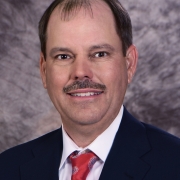
Stephen Bedner Appointed Board President

Stephen Bedner was appointed the president of the Lake Worth Drainage District (LWDD) Board of Supervisors for 2019 by a unanimous vote of his fellow board members during the January 9, 2019 meeting.

President Bedner joined the board in October 2015. He represents Election Sub-district 2 which is generally located in the southwest portion of LWDD’s boundary. However, the constituents he represents include all landowners within the LWDD boundary.

“I am very pleased that Steve has accepted the position of president for the coming year. He is an experienced and highly knowledgeable farmer and businessman,” stated Board Supervisor John I. Whitworth, III.

Mr. Bedner is a South Florida native and 4th generation farmer. His family farm consists of growing bell peppers and cucumbers which are primarily distributed along the east coast. In 2010, the business diversified and opened the first farmer-owned and operated greenmarket in Palm Beach County. Given his agricultural history and business experience, Mr. Bedner is focused on finding innovative technology to enhance management operations in order to help protect water resources for future generations.

He is an active member of the Florida Farm Bureau, Florida Fruit & Vegetable Association, Farm Credit, Bethesda Health and was appointed by former Commissioner of Agriculture Adam Putnam to serve on the Fresh from Florida committee. His term as a member of the LWDD Board of Supervisors will expire in January 2020.

LWDD’s Management Team

Tommy B. Strowd, P.E Appointed New Executive Director

Photo of Tommy Strowd, PEThe Lake Worth Drainage District (District) Board of Supervisors announced the appointment of Tommy B. Strowd, P.E. as the agency’s new Executive Director, effective March 29, 2019. Strowd succeeds Robert M. Brown who retired after 35 years of public service.

Strowd joined the Lake Worth Drainage District in April 2014 as the Director of Operations & Maintenance. He has more than 35 years of experience in civil, environmental and water resource engineering in the public and private sectors. Prior to joining the District, Strowd served as the Assistant Executive Director of Operations, Maintenance & Construction for the South Florida Water Management District. He has a Bachelor of Science degree in Oceanographic Technology from Florida Institute of Technology and is a professional engineer registered in the State of Florida since 1983.

Strowd stated, “I am honored to be appointed as Executive Director of the Lake Worth Drainage District. I consider it the highpoint of my career and look forward to continuing to serve our residents and property owners to ensure effective flood control and water supply for Palm Beach County.”

Founded in 1915, the Lake Worth Drainage District is an independent special district that manages water resources and provides flood control for approximately 800,000 residents and more than 10,000 acres of agricultural land in southeastern Palm Beach County.

Maintenance Enhanced With Drones

Approximately three years ago, the Lake Worth Drainage District (LWDD) began implementing the flying of Unmanned Aircraft Systems (UAS) commonly known as drones to monitor the canals, rights-of-way and flood control structures within its 200 square miles of service area.

The drones are used as a professional tool to gather data, take images and video. The ‘bird’s eye-view’ provides a unique perspective that can quickly identify issues so that corrective actions can be taken before they develop into costly repairs. Due to their small size, the drones can reach areas difficult to inspect from the ground. They perform quickly and in a repetitive manner providing accurate and consistent data. Drone flights can cover large geographical areas using a two-man crew in a stationary location. This helps minimize inspection costs and avoids exposure of personnel to possible environmental risks and injuries.

LWDD deployed its drones after Hurricanes Irma & Michael. The results were very beneficial in post-storm assessments by aiding recovery teams to efficiently identify damage sites and prioritize response efforts. The data captured by the drone flights can be mapped and used for future emergency response planning by water managers.
LWDD’s operators strictly adhere to the Federal Aviation Association’s (FAA) regulations and are cognizant of surrounding homes during flights. The District’s drone operators hold a certification from the FAA, and follow strict safety practices. The use of UAS systems is one of the more recent additions to LWDD’s flood control toolbox.

The Lake Worth Drainage District is committed to implementing new technologies that will enhance flood control operations for the estimated 750,000 residents within its boundaries. For more information on the various methods used for flood control, visit https://lwddnet.wpengine.com/managing-water/overview.

Flood Control Checkup

Throughout the year, the Lake Worth Drainage District (LWDD) oversees the operation and maintenance of approximately 500 miles of canals and 1,000 miles of canal rights-of-way. In addition, LWDD operates 20 major water control structures which release or hold back water depending on conditions. However, effective flood control takes more than just LWDD. Property owners and residential communities all have a role to play in the overall flood control system.

In South Florida, flood control is a shared responsibility and is achieved through an interconnected, three-tiered drainage system. This three-tiered system is made up of tertiary or neighborhood drainage systems operated by property owners or residential associations. Secondary drainage systems which are operated by LWDD, county or municipalities, and the primary system operated by the South Florida Water Management District (SFWMD).

The role of property owners and residential associations is similar to LWDD in that they retain stormwater onsite in retention ponds/lakes for water quality purposes and discharge excess stormwater for flood control. They must maintain their drainage infrastructure to ensure that inlets, pipes and discharge control structures are working as designed.

South Florida’s dry season runs from approximately November through May. January is the ideal time of year to conduct inspections of drainage infrastructure and make any necessary repairs. Additionally, the start of a new year is when many residential boards hold elections and change property management companies. It is important to register these changes with LWDD to ensure the correct individuals are receiving important weather alerts and flood control instructions. Taking time during the dry season will help ensure that your property is ready for the coming rainy season. For more information on flood control or to submit contact information, visit LWDD’s website at www.lwdd.net