Hurricane Season Is Here

Florida’s hurricane season begins on June 1 and ends November 30. Based on historical weather records dating back to the 1950s, a typical season will average 12 tropical storms with sustained winds of at least 39 miles per hour, of which six may turn into hurricanes with winds of 74 miles per hour or more. In addition to high winds, hurricanes and tropical storms can bring torrential rainfall and localized flooding.

Localized flooding from these types of severe weather events can be exacerbated because of improperly maintained drainage systems. Residential communities and businesses can help mitigate the impacts from severe storms. One of the most important steps is the regular inspection and maintenance of drainage infrastructure. Drainage infrastructure can include inlets, discharge control structures, connecting pipes and ponds. Proper maintenance of these facilities will ensure unobstructed flow of stormwater and fully operational equipment.

Additionally, residential communities and businesses with operable discharge control structures can request authorization from the Lake Worth Drainage District (LWDD) to open these structures prior to the storm. Lowering pond levels prior to the rain event provides additional storage in ponds for excess stormwater. The LWDD recommends establishing a Drainage Committee whose role is to provide for the maintenance and operation of the community or business’s drainage system. Drainage Committees may consist of board members, residents and/or property managers. All members of the Drainage Committee should register with the LWDD on its website at www.lwdd.net/storm-response. This registration process ensures the LWDD knows who to contact and where to send important weather alerts and instructions.

During the storm, LWDD personnel will monitor canal elevations and make operational adjustments to major flood control structures as needed. Depending on the volume and duration of rainfall, expect streets, sidewalks, driveways and lawns to flood. These areas are designed to function as secondary detention areas and help to keep water away from homes and businesses. This flooding is temporary and will begin to recede after an event has passed. However, always follow emergency management instructions if told to evacuate.

It may be tempting to explore outside, for your safety and to keep roadways clear for emergency response vehicles, stay indoors until told otherwise by authorities. Do not try to walk in flooded areas. Flood water may be unsanitary and there may be downed power lines or other hazards that are not visible. Do not try to drive through flooded areas. Vehicles can become unstable and float in just inches of water. Additionally, canal banks may fail, and roadways may be impacted by sinkholes. The location of roads and sidewalks may not be discernible from canals due to the sheeting effect of flood water and life-threatening accidents can occur.

No system, no matter how well designed, is 100% flood proof but collaborating with communities, businesses and other water management agencies, LWDD can help keep you and your property safe from potential flooding.
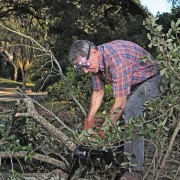
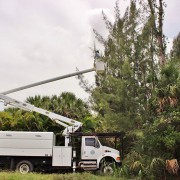
Post-Storm Debris Removal: What You Can Expect

Following a severe storm event, the Lake Worth Drainage District (LWDD) conducts immediate post-storm assessments, inspecting water control structures, canal channels and the canal rights-of-way for vegetative debris with the potential to negatively impact drainage.

The public can assist via our Citizen Damage Reporting System located on our website at https://www.lwdd.net/storm-response.  The user will be asked a few questions and a map will be provided to help identify the location of the incident. These public reports as well as LWDD staff assessments are reviewed and prioritized for vegetation removal. Priority is based on the following criteria:

  • High Priority – vegetation is in the water and threatening drainage
  • Medium Priority – vegetation is blocking the right-of-way and encumbering access or vegetation is significantly leaning over the waterway and could be a potential future threat to drainage
  • Low Priority – vegetation located on the LWDD right-of-way that may partially reduce access

Depending on the severity of the storm damage it may take several weeks before crews can address low priority incidents. Private property owners that wish to trim vegetation that has fallen or is leaning on their property from the LWDD right-of-way may do so at their discretion and expense. If access to the LWDD right-of-way is necessary to trim or remove vegetation, the property owner should receive prior approval from the LWDD for temporary access.

Any material from trimming or tree removal by the property owner must be properly disposed of by the resident or if applicable the contractor performing the work. Keep in mind that it is unlawful to place any debris in the canal or on the right-of-way in anticipation that LWDD will remove the material. Unlawful dumping will be reported to the authorities.

If fallen debris has damaged personal property, the individual property owner should contact their insurance company to submit a claim. The LWDD will not directly reimburse property owners for damage caused by acts of mother nature.

After a major storm event, debris clean-up is paramount to getting back to normal and the LWDD is committed to quick removal of hazardous flood prone debris for the safety of our residents.

That’s A Good Question

What are LWDD’s contingency plans for canal maintenance projects that are underway during hurricane season?

The Lake Worth Drainage District is always mindful of the potential effects of severe storms on project sites. Staff regularly monitor weather conditions for potential impacts. Each storm is unique, and the required preparation will be determined depending on the specific weather prediction and status of the project site.

Automation For Faster Response

South Florida’s tropical weather events can be intense and seriously threaten property and life. In response, the Lake Worth Drainage District (LWDD) monitors canal elevations and makes necessary operational adjustments to its water control structures to provide flood control for the 200 square miles of land within its boundary.

Water control structures act like dams, allowing stormwater to be released or held back depending on weather conditions. The technology used to operate LWDD’s water control structures is called Supervisory Control and Data Acquisition (SCADA). As the water rises in the canal and reaches a pre-determined elevation, SCADA will slowly open control structures releasing water for flood control. Similarly, as water elevations return to normal levels the control structure gates will close, holding back water for conservation and water supply demands.

This response to changes in the canal system happens automatically and can be monitored remotely by staff using mobile devices. However, in anticipation of severe weather, staff can override the automated SCADA system and make manual adjustments as needed. The remote monitoring and operating functions of SCADA eliminates the need for LWDD staff to venture out during dangerous weather conditions to operate control structures, as well as significantly reduces response time.

Another advantage to SCADA is the capture of operational data by the system which can be used to evaluate future water supply needs and historical flood control responses. This data can be shared with regional water management partners for enhanced flood control coordination and water conservation measures.

LWDD is proud to provide the residents and businesses within our boundary this advanced flood control technology.

What Is A Special District?

There are many special districts within the State of Florida. The Lake Worth Drainage District (LWDD) is one of the more than 1,800 active special districts that provide services. However, many Floridians do not understand what a special district is, and its role in the community.

Special districts have four common characteristics. They are a form of government; they are governed by a board; they provide services and facilities; and they have defined boundaries.

Unlike cities and counties that are general purpose governments and perform a broad array of services to protect the health, safety, and welfare of all their citizens, special districts are limited purpose local governments and provide only the specific services for which they were created. They are good examples of democracy at work because they provide services the public requires and only those receiving the services pay an assessment, fee or tax.

Special districts have the legislative authority to provide the required facilities to complete the work they were created for. For example, constructing public works projects such as canals and water control structures. They have the taxing authority to raise money to pay for these projects as well as their maintenance and operation. However, special districts rarely have regulatory authority to enact laws or ordinances for a common public goal. For example, water restrictions which are imposed to reduce the public’s use, are under the authority of the South Florida Water Management District, a state agency.

Most special districts are single purpose Districts. This is true for the LWDD whose sole function is to provide drainage for the landowners within its boundary. Others, such as the Indian Trail Improvement District provide several services in addition to drainage, like road construction and recreational facilities. Special districts can further be identified as dependent or independent. LWDD is an independent district because its governing board is elected by the landowners within its boundary and not appointed by another government entity as in the case of the Housing Finance Authority of Palm Beach County.

LWDD is authorized by legislation to assess its landowners for the flood control services it provides. In 2023, the assessment is a non-ad valorem fee of $49.50 per one acre or portion thereof. The acre assessment provides that all landowners within the LWDD boundary pay a share that is weighted to the quantity of land that receives drainage services. For example, the average single-family resident pays $49.50 a year whereas an agricultural business may pay several hundred times that amount.

It is common for drainage districts to elect board members by a ‘one acre one vote’ method. This is different than a ‘one person one vote’ method used by cities and counties. The acre-vote system ensures landowners who have a greater stake in the drainage services received also have a greater say. This is like owning stock shares in a company. The more stock you own, in this case land, the more votes you cast. Because LWDD provides only the single purpose service of drainage, it is reasonable that the number of votes cast be comparable to the amount of assessment paid and quantity of land owned.

Special districts have been a part of our government history for hundreds of years. Benjamin Franklin established the first special district on December 7, 1736, when he created the Union Fire Company of Philadelphia, a volunteer fire department.  Residents in a certain neighborhood paid a fee to receive fire protection services. Soon, many volunteer fire departments formed throughout Philadelphia. This prompted Franklin to boast that his city had the best fire service in the world.

You can learn more about the governance role of LWDD at our website at  www.lwdd.net.