
LWDD Moving Water, Urges Communities to Clear Drains and Structures
DELRAY BEACH, FL (Sept. 20, 2026) – The Lake Worth Drainage District (LWDD) continues to move water from significant rainfall and is monitoring weather forecasts and canal levels.
At this time, all 500 miles of LWDD canals and water control structures in southeastern Palm Beach County are operating as designed to move water as quickly and safely as possible. The agency utilizes an automated water control system, with staff monitoring fluctuating rain and water levels. Canal levels are all well within normal ranges and have additional capacity to receive drainage.
At the same time, LWDD has received reports from communities in the most saturated areas of lakes overflowing their banks and street flooding.
Responding LWDD field staff have found some communities have internal drainage systems that are blocked or are experiencing other issues, especially within the neighborhood water control structures themselves. These issues are likely slowing the flow of water to the LWDD system.
Following are recommended measures for property managers, HOA boards and residents to consider:
- When safe, ensure your street drains, lake pipes and outfalls, and especially weirs and related drainage infrastructure are clear. Even if you don’t see an obvious blockage, there may be one under the water.
- For weirs, there is typically a bleed down orifice (see photo at the end of this release) in the middle of the structure that must be clear. The only way to see this is to look down into the structure if safe to do so.
- Residents: Your point of contact for flooding in your community is your HOA, municipality or property manager. Contact LWDD if you see issues with the large canals outside the community.
- HOAs and Property Managers: Have a list of emergency debris removal and pump contractors on file who can respond to flooding in your neighborhood.
- When the event is over, have your internal drainage system inspected by a properly licensed and qualified company to identify current and potential issues.
- Obtain a copy of your community drainage plans and permits from the South Florida Water Management District: www.sfwmd.gov.
- Know the permitted elevation of your lakes and have a way (staff gauge) to measure water levels.
These measures will help your community prepare and respond to storms but will not prevent all flooding. When lakes, ponds and swales reach capacity, water will flood streets, which become additional storage areas for the excess rainfall. Neighborhood drainage systems are designed this way to help prevent water from entering homes.
For communities that have Emergency Operable Structures, no authorization has been given at this time to open any structures. These structures are only operated in extremely rare and severe circumstances surrounding a major storm, in accordance with state water quality laws.
Emergency Operable Structures were not designed to provide relief during a storm event, and unauthorized opening can cause significant flooding and water quality violations.
LWDD is not an emergency response organization and has no ability or authority to inspect, drain or repair private neighborhood drainage systems. For any life safety issues, please call 911.
Email or call the LWDD Emergency Operations Center if you see any issues with LWDD canals or structures: eoc@lwdd.net or (561) 498-5363. Emails and calls are immediately transmitted to staff and will be returned as soon as reasonably possible.
Ensure your community has an Authorized Flood Control Contact on file at the LWDD so the agency can provide important information when necessary. This should be the person or persons authorized to manage your community’s drainage system. This can be done online: www.lwdd.net/authorization-contacts.
Please remember to avoid driving on a flooded road.
Email info@lwdd.net with further questions you may have.
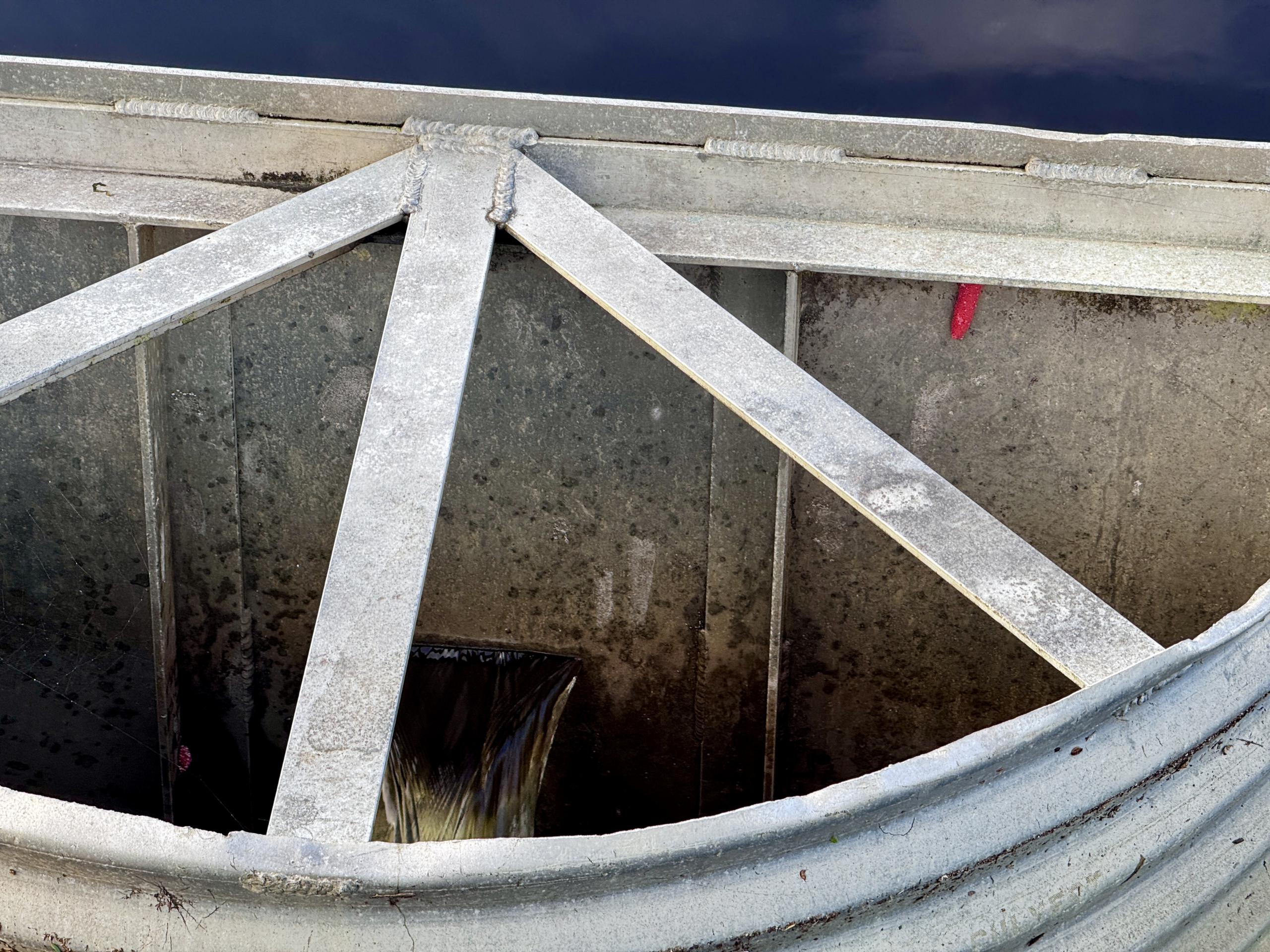
(This photo shows the bleed down orifice in the middle of a community structure operating as designed on Sunday, Sept. 20. A blockage of this opening can cause flooding.)
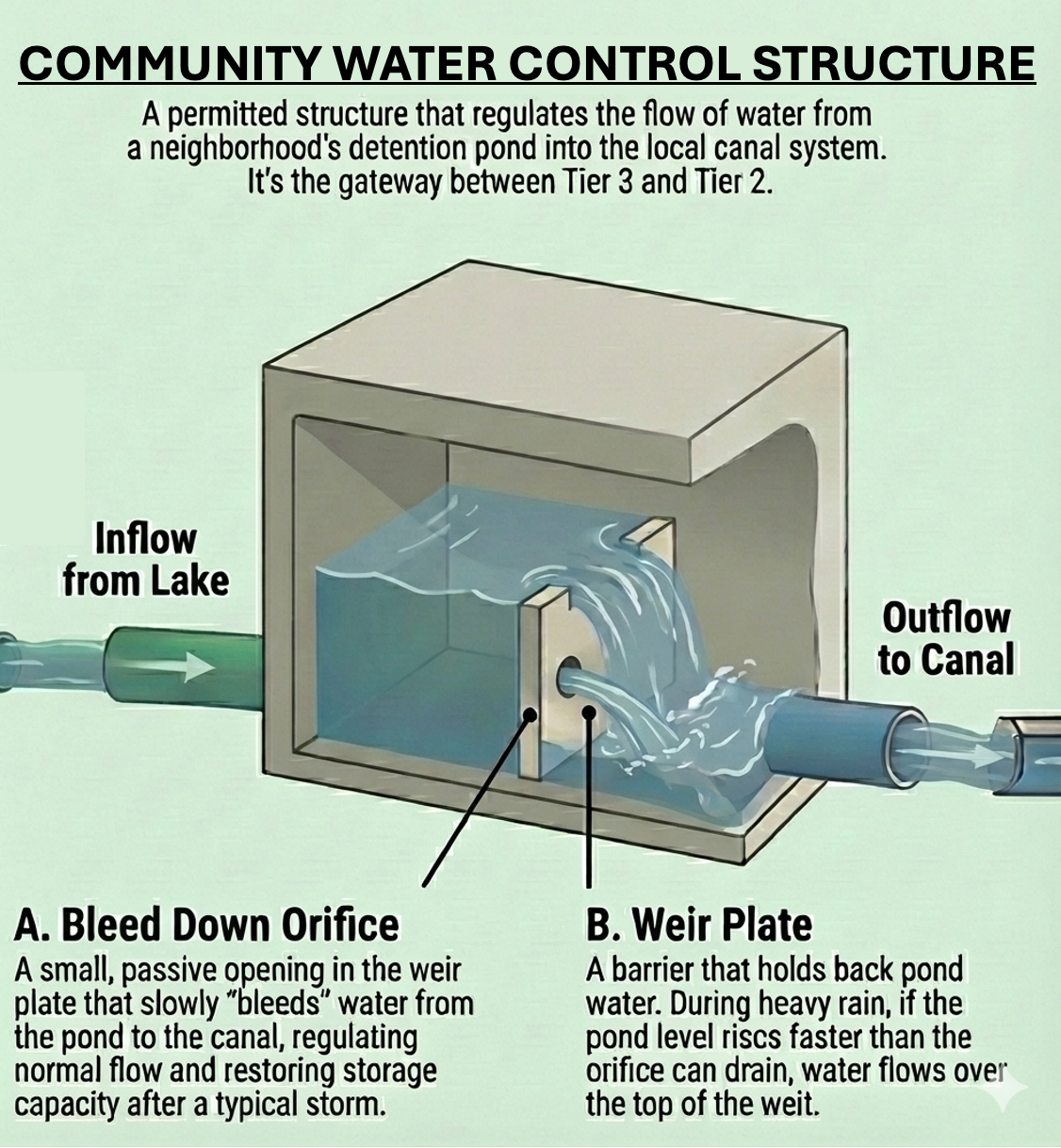
(The conceptual image above depicts a neighborhood water control structure. Ensuring it is clear of debris, especially the bleed down orifice, is critical to its operation. Actual community structures may have a different design.)

